ATM Bersama
Payment Network
Brand Info
5+ ATM Bersama Logo PNG & SVG Download
ATM Bersama Brand Colors
About ATM Bersama
As the pioneering backbone of Indonesia's financial infrastructure, the ATM Bersama logo stands as a ubiquitous symbol of connectivity and monetary accessibility across the archipelago. Representing the first and largest ATM network in the nation, this visual identity is more than just a corporate mark; it is a seal of interoperability that bridges over 91 distinct financial institutions and non-bank entities. Founded by Artajasa in 1990, the network was established to unify a fragmented banking landscape, adopting a model similar to the MegaLink network in the Philippines. Today, the branding serves as a beacon of trust for millions of customers relying on over 100,000 terminals for seamless transactions.
"Our mission is to create a borderless payment ecosystem where every transaction is seamless, secure, and accessible to all Indonesians, regardless of their bank."
Meaning and History of the ATM Bersama Logo
The history of the ATM Bersama logo is deeply intertwined with the technological evolution of the Indonesian banking sector. When the network was launched in the early 90s, the primary objective was to communicate the concept of "Bersama"—which translates to "Together" or "Joint" in Indonesian. The visual identity needed to assure customers that their specific bank card would work in a machine belonging to a completely different institution, a revolutionary concept at the time. Consequently, the branding was designed to project stability, neutrality, and technological competence. The logo acts as a guarantor of the underlying infrastructure provided by Artajasa, symbolizing a digital handshake between competing banks for the greater good of the consumer.
The Evolution of the Symbol
While many technology companies undergo radical rebrands, the ATM Bersama logo has maintained a remarkable consistency, reflecting the conservative and stability-focused nature of the Finance industry. The visual evolution has been subtle, primarily shifting towards cleaner lines and higher legibility to accommodate modern digital interfaces. In the early days, the emblem appeared primarily on physical decals stuck to ATM machines and lightbox signage. Today, the visual identity must perform equally well as a tiny app icon or a digital badge on e-commerce checkout pages. This transition has led to the availability of the ATM Bersama logo in high-definition vector formats, ensuring that the mark remains crisp whether displayed on a 4K monitor or a printed bank statement.
Design Elements & Typography
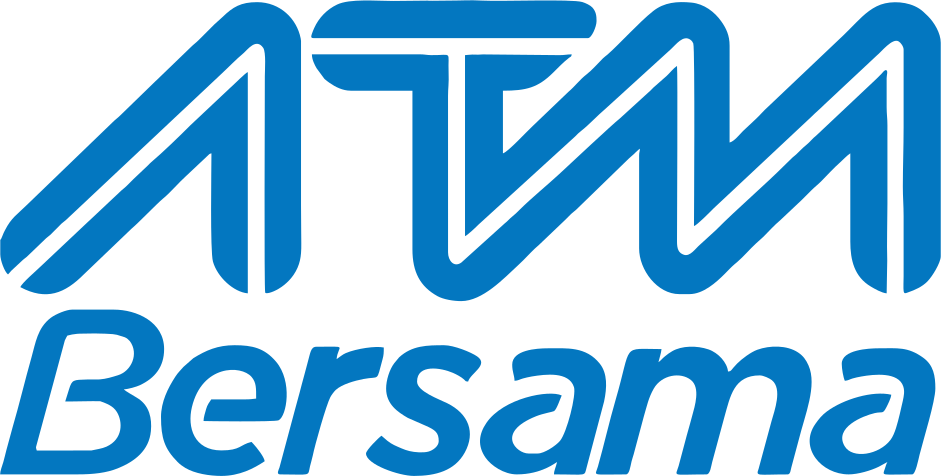
From a design perspective, the emblem relies heavily on strong, assertive typography to convey authority. The lettering is typically rendered in a bold, sans-serif typeface, which maximizes readability from a distance—a crucial feature for physical signage in busy public spaces. The structure of the text suggests solidity and permanence, traits essential for building consumer trust in financial handling. Often accompanied by graphic chevrons or arrows in various iterations of the branding materials, the symbol implies movement and transaction flow, reinforcing the network's function as a conduit for capital. The spacing between the letters is tight, metaphorically representing the close cooperation between the member banks that the network supports.
ATM Bersama Color Palette
The color psychology behind the brand is anchored in a specific shade of medium blue. In corporate branding, particularly within the financial sector, blue represents intelligence, stability, and trust. The specific hex code utilized creates a calm yet professional demeanor, distinguishing it from the aggressive reds or urgent oranges often used in retail.
Brand Impact
Ultimately, the ATM Bersama logo has transcended its corporate origins to become a utility symbol for the Indonesian public. It is a critical component of the nation's visual landscape, signaling financial inclusion and ease of access. For designers and historians, the logo represents the successful visual implementation of a shared economy model long before the term became a buzzword, proving that effective branding is about consistent promise-keeping over decades.