
Figma
Technology
Figma Logos & Assets6



Figma Brand Colors
Figma Typography
About Figma
Figma has fundamentally reshaped the landscape of digital product design, moving the industry from isolated offline workflows to a synchronized, collaborative, and web-based future. As an all-in-one platform, it allows creators to design, prototype, and develop with unprecedented speed and transparency. More than just a tool, Figma represents a cultural shift in how teams communicate, embodied perfectly by its vibrant and playful visual identity. At the core of this identity is a commitment to openness and community, ensuring that the design process is not a solitary act but a shared journey.
"Our vision is to make design a collaborative, borderless, transparent, community-driven, and open-sourced endeavor."
Meaning and History of the Figma Logo
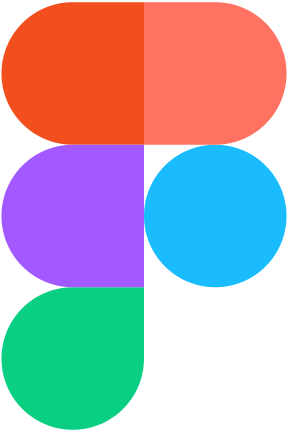
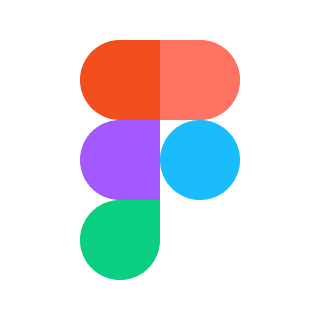
The Figma logo is a masterclass in representing complex utility through simple geometry. Unlike many tech logos that opt for abstract swooshes or literal representations of tools (like pencils or brushes), the Figma emblem is a metaphor for the medium itself. Designed to represent the very building blocks of the web, the logo forms a subtle "F" shape constructed from a grid of five distinct shapes.
The meaning behind the Figma logo is deeply rooted in the concept of "composition." In digital design, everything is a collection of layers, frames, and vectors stacked upon one another. The logo visualizes this stack, referencing the verticality of layers panels found in UI tools. It suggests that creativity is the sum of various parts coming together. Furthermore, the playful arrangement reflects the founders, Dylan Field and Evan Wallace, and their background in computer graphics and mathematics; the logo feels like a variable font or a piece of generative art, hinting at the powerful vector engine that runs beneath the hood.
The Evolution of the Symbol
Since its public launch around 2016, the Figma symbol has remained remarkably consistent, a testament to its forward-thinking design. While other tech giants frequently rebrand to chase trends, Figma launched with a visual identity that was already future-proof. The primary evolution has occurred not in the logo itself, but in how the branding system expands around it. Initially, it stood as a rebellious alternative to the established desktop-software giants.
Over time, as Figma became the industry standard, the logo transitioned from a challenger symbol to a badge of the modern designer. It has become synonymous with "multiplayer" design. The mark is adaptable; it works just as effectively as a tiny favicon on a browser tab as it does plastered on billboards for their Config conference. This consistency has helped cement the Figma logo in the minds of millions of users as the gateway to the open web.
Design Elements & Typography
The genius of the visual identity lies in its geometry. The logo consists of three circles on the left and two "squircles" (superellipses) on the right, arranged in a 2x3 grid (with the bottom right corner empty). This use of the squircle is significant; it represents the mathematical precision of vector networks that Figma is famous for. It softens the rigidity of a standard grid, making the tool feel approachable and human rather than purely mechanical.
Typographically, Figma typically pairs its emblem with a grotesque sans-serif font that exudes clarity and neutrality, allowing the user's work to take center stage. The wordmark is understated, letting the colorful emblem do the heavy lifting. This balance ensures that the brand feels like a blank canvas—a support system for creativity rather than a stylistic dictator.
Figma Color Palette
The color palette is the heartbeat of the Figma brand. The logo utilizes a spectrum of five distinct colors, which is somewhat rare for a corporate identity that usually sticks to one or two primary hues. Each color in the stack helps define the geometry and adds depth to the "F" shape.
- The top-left Red attracts attention, anchoring the shape.
- The top-right Blue suggests intelligence and technological depth.
- The purple and orange centers add a layer of creative energy and vibrancy.
- The bottom Green signifies growth and execution (akin to the "shipping" of a product).
Collectively, these colors represent the diverse disciplines—engineering, design, product management, and writing—that come together within the tool.
Brand Impact
Today, the Figma logo is recognized globally as the standard for interface design. It captures the essence of a tool that is powerful enough for engineers yet accessible enough for beginners. By utilizing a multicolored stack of shapes, Figma visualizes the chaotic, beautiful, and collaborative process of modern creation.